Why Your Leadership Training Did Not Produce Lasting Change
Most leadership training produces well-informed people who change nothing.
You have seen this pattern. You spend six figures on a comprehensive leadership development initiative. Your executive team flies to a retreat. The facilitator is engaging. The frameworks make perfect sense. Your leaders leave the event energized, carrying notebooks full of strategic insights and commitments to change the culture.
Two weeks later, they are back in the same meetings, running the same patterns, producing the same results.
The planning cycle goes back to being a reactive mess. The departmental silos rebuild themselves. The accountability conversations that were role-played so perfectly at the retreat are quietly abandoned the moment a real conflict arises.
You blame the managers for lacking follow-through. You blame the training vendor for delivering weak material.
Both assessments are wrong. Your leadership training did not produce lasting change because information does not produce behavior change. Systems produce behavior change.
When you send a manager to a training event, you are attempting to change their internal mindset. You are trying to convince them to be a better communicator, a more decisive thinker, or a more empathetic listener. That is a noble goal, but it is entirely subjective.
When that manager returns to the office, they are placed right back into the exact same operational environment that created their bad habits in the first place. The incentive structures have not changed. The meeting cadence has not changed. The reporting requirements have not changed.
The environment will always defeat the individual. You cannot put a newly inspired leader back into a broken system and expect them to outperform it.
Lasting change requires you to alter the environment. That is what Performance Architecture does.
Instead of teaching a manager how to have a difficult conversation, architecture dictates exactly when that conversation must happen and what metric triggers it. Instead of teaching a team how to collaborate, architecture installs a cross-functional reporting structure that makes isolation impossible.
We do not focus on making your leaders feel differently. We focus on forcing them to operate differently. When you change the operational reality, the behavior adapts immediately. The mindset shift follows the structural shift, not the other way around.
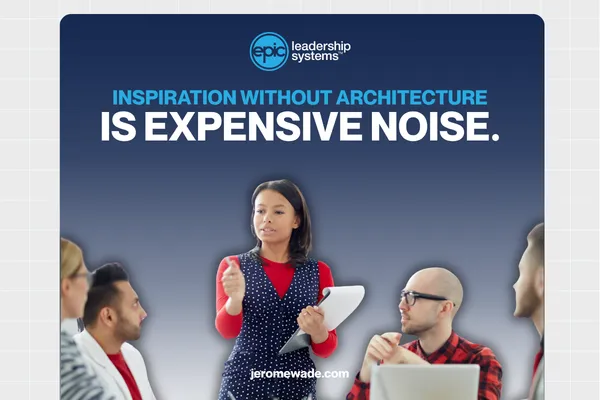
Inspiration without architecture is expensive noise.
If your organization has an investment in leadership development that disappeared without a return, we need to talk. Here is how we work and here is the first step.


